Graves' Disease: Genetic Factors and DNA Insights
Graves disease is influenced by genetics, but it is not usually inherited through one variant with a predictable outcome. It is an autoimmune condition in which antibodies stimulate the thyroid, often causing excess hormone production. The antibodies and current thyroid state are acquired biological findings, while inherited variation can shape susceptibility. Understanding Graves disease genetics means keeping those layers separate and recognizing that predisposition is not a diagnosis.
What distinguishes Graves disease
Graves disease is one cause of hyperthyroidism, the active overproduction of thyroid hormone. Other thyroid conditions can also produce hormone excess, so symptoms such as palpitations, tremor, heat intolerance, anxiety, or weight change are not specific. Eye or skin manifestations may occur in Graves disease, but their pattern and severity vary.
The condition is defined by an autoimmune process, not merely by a high thyroid hormone result. Clinical testing is used to establish hormone status and identify the cause. A genetic tendency toward autoimmunity cannot show whether stimulating antibodies are present now.
Inherited susceptibility affects immune and thyroid biology
Many inherited differences can influence how immune tolerance is maintained, how immune signals are regulated, and how thyroid cells respond. Each common variant generally carries limited information by itself. The relevant combination may lower or raise susceptibility without making disease inevitable.
Genetics can also overlap across autoimmune thyroid conditions. A family may contain relatives with different forms of thyroid autoimmunity rather than the same diagnosis. This shared background does not mean one disorder will necessarily turn into another or that every relative will become affected.
How to interpret family history
A useful family history records confirmed Graves disease, other autoimmune thyroid disease, goitre, thyroid nodules, and unexplained thyroid hormone abnormalities. It also notes which relatives were affected and their age at diagnosis. “Thyroid disease” alone is too broad to establish a hereditary pattern.
Family clustering reflects shared DNA but can also reflect iodine environment, smoking patterns, healthcare access, and greater awareness leading to testing. An affected parent or sibling changes context, not certainty. Many people with family history remain unaffected, and many diagnosed people have no known close relative with Graves disease.
Polygenic inheritance is not a family rule
Common Graves susceptibility is polygenic: numerous variants contribute small effects that interact with biological sex, age, immune history, and exposures. This differs from a simple dominant or recessive disorder. Siblings can inherit different combinations, and identical inherited risk can lead to different outcomes because later immune events differ.
Polygenic scores are also dependent on reference populations and diagnostic definitions. A score trained mainly in one ancestral group may be less reliable in another. It cannot capture every rare variant or non-genetic influence, and it does not measure antibodies or hormone levels.
Non-genetic factors affect when disease appears
Smoking, iodine exposure, pregnancy-related immune shifts, medicines, and other immune or physiological events can affect thyroid autoimmunity or its expression. Their effects are not uniform, and none should be treated as the sole explanation for an individual's disease. Stress may accompany symptoms but should not be assigned as a genetic or autoimmune cause without evidence.
Some influences are also relevant only to particular manifestations. A simple lifestyle checklist cannot replace clinical assessment, and a person should not infer causation from timing alone. The interaction between susceptibility and environment is real but rarely reconstructable as one personal trigger.
Clinical tests address disease, cause, and effects
Evaluation typically combines thyroid hormone measurements with the regulatory hormone, antibody tests, symptoms, and examination. Imaging or functional tests may be used when the cause remains uncertain or when nodules require assessment. These data distinguish Graves disease from thyroid inflammation, autonomous nodules, and external hormone exposure.
Results also need to be interpreted together. An antibody can support an autoimmune explanation, while the hormone pattern indicates present thyroid function; neither replaces the other. Clinical context helps determine whether a result is new, persistent, affected by medication, or discordant enough to require confirmation. Inherited susceptibility cannot resolve those practical questions.
A consumer DNA test is not a medical diagnosis and does not replace clinical evaluation. It cannot confirm Graves disease, measure present thyroid function, detect the complete antibody pattern, or assess effects on the heart, eyes, bones, and other systems. Low estimated genetic susceptibility cannot rule out disease.
Reading genetic information without overclaiming
Check whether a report concerns Graves disease specifically, general autoimmunity, or another thyroid trait. Look for the variants included, population used, effect size, and limitations. A relative-risk statement is not the same as a personal absolute probability. The at-home DNA testing guide explains why informational reports and clinical tests should not be conflated.
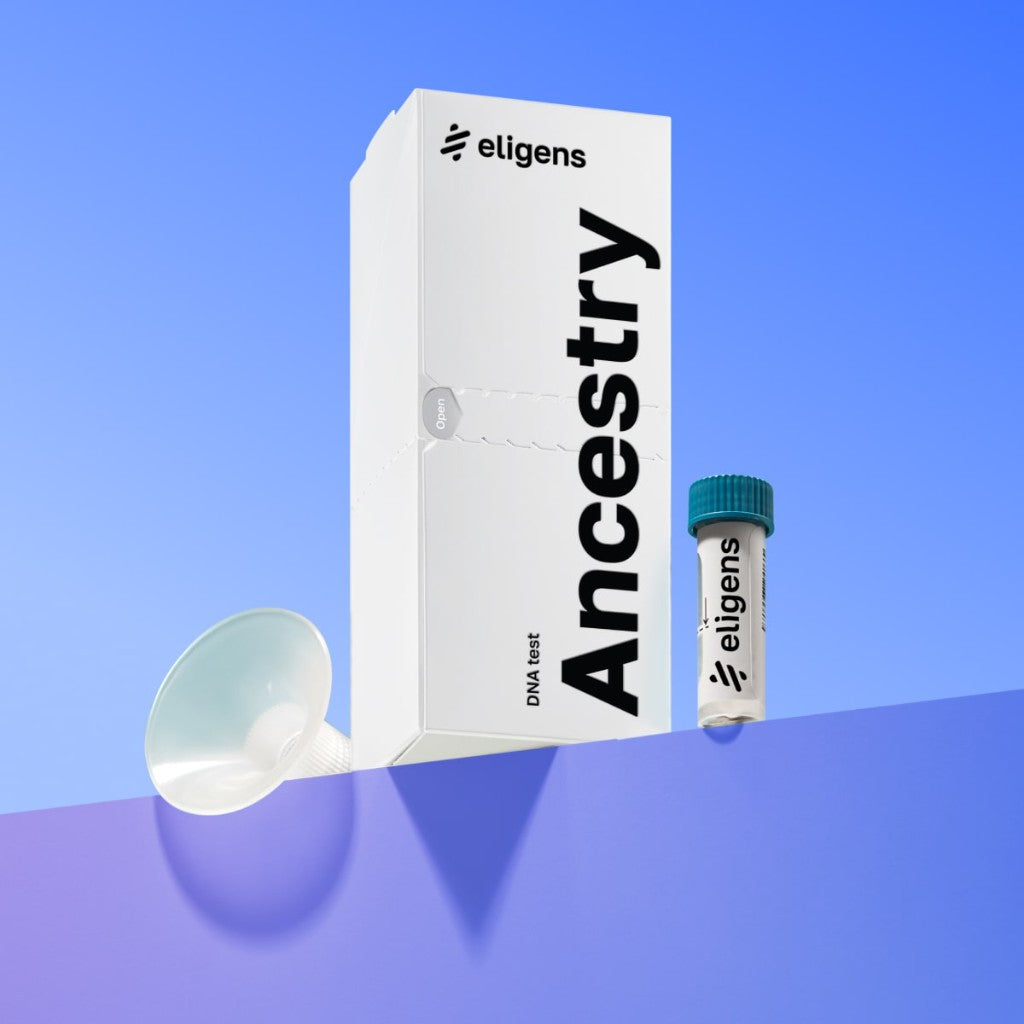
Eligens Ancestry + Health provides informational genetic insights related to 180+ conditions. These insights are broad context rather than evidence of current thyroid overactivity or autoimmunity. Check the current product description to confirm the actual report coverage before purchasing.